Editor's Choice
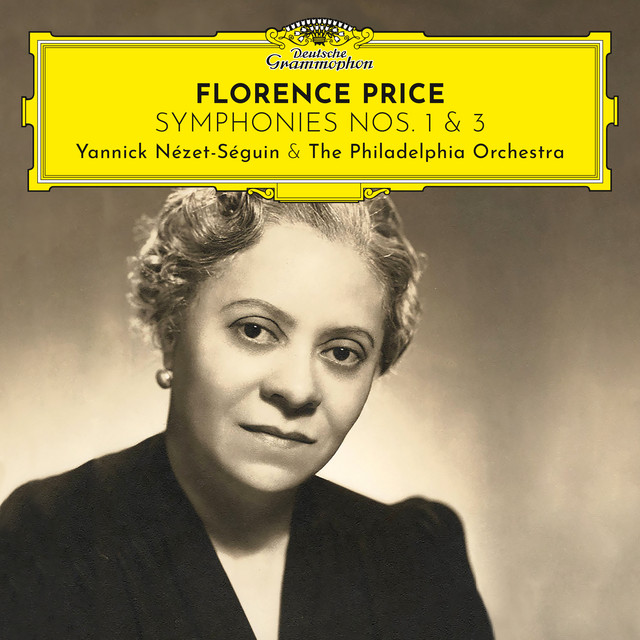
Florence Price
Symphonies Nos. 1 & 3
Philadelphia Orchestra / Yannick Nézet-Séguin · Deutsche Grammophon · F D 486 1900
Yannick Nézet-Séguin and the Philadelphia Orchestra deliver a revelatory account of Florence Price's First and Third Symphonies, treating this long-neglected music—exhumed after nearly a century—with the seriousness and passion it deserves. Nézet-Séguin brings his trademark fire, spontaneity, and poetic sensibility to performances that feel both historically grounded and freshly discovered. The conductor captures the unique blend of Dvořákian pastoral warmth and authentic American Deep South spirit, with particular brilliance in the second subject's "homespun quality that makes even Dvořák sound like a tourist." The post-Mahlerian funeral procession of the Largo and the celebratory Juba dance rhythms receive performances of profound dignity and infectious joy. The Philadelphia Orchestra's wind solos are exquisitely shaped, and the brass chorales resonate with authentic power. This recording transforms what could have been a footnote in music history into a major artistic statement, proving Price to be an original voice of emotional truth and exuberance.
♪
Editor's Choice
Bartók, Beethoven, Berg
Violin Concertos – Bartók No 1 & 2, Beethoven Op 61, Berg
Frank Peter Zimmermann (violin), Berlin Philharmonic Orchestra / Alan Gilbert, Daniel Harding, Kirill Petrenko · Berliner Philharmoniker · BPHR210151
This magnificent four-disc box set presents Frank Peter Zimmermann at his finest, recorded live with the Berlin Philharmonic across multiple years. The Berg Concerto under Kirill Petrenko emerges as the standout—a 'tribute to the memory of a dancing angel' that combines musical refinement with tragedy in a way rarely achieved. Zimmermann brings both virtuosity and poetry to every work here. The Beethoven, recorded in 2019, shows a transformed approach from his 1987 version—more streamlined yet no less communicative, with the orchestra's playing under Daniel Harding alert to every phrase. The two Bartók concertos, from 2016, reveal Zimmermann and Alan Gilbert finding unexpected playfulness in the Second while delivering a first concerto 'tonally silken and shaped with the hypnotic skill of a Celibidache.' Sumptuous packaging with Blu-ray disc and extensive booklet completes this essential release.
Not on Spotify
Also consider


Editor's Choice
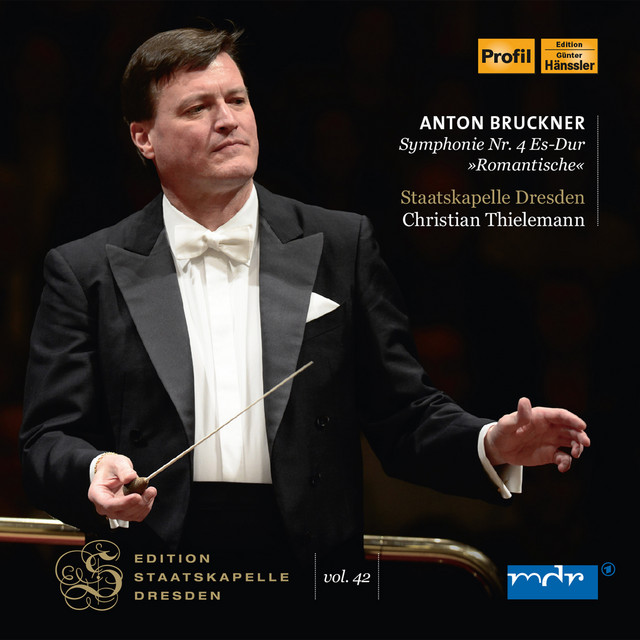
Bruckner
Symphony No 4, 'Romantic' (ed Haas)
Vienna Philharmonic Orchestra / Christian Thielemann · Sony Classical · 19439 91411-2
Christian Thielemann and the Vienna Philharmonic deliver what reviewer Richard Osborne calls 'something entirely special' in this Bruckner Fourth. The performance avoids the pitfalls of unduly broad tempos that have afflicted other readings while maintaining the spaciousness the work demands. Thielemann's 'perfectly judged rhythmic flow' gives the opening movement a forward-moving momentum that remains non-prescriptive, while his approach to the famous hunting Scherzo and finale suggests a journey 'with grander vistas beyond.' Most remarkable is the slow movement—a 'pastoral meditation' drawn from the orchestra with 'music-making of the rarest pedigree.' The recording, made in Salzburg during the 2020 festival, captures the orchestra at full strength in excellent sound. For anyone seeking a Bruckner Fourth that is both 'of a piece with itself' and at peace with this glorious musical bequest, this is the version to own.
Also consider
Bruckner — Symphony No 4
Klemperer's 1963 recording offers notably brisker tempos, though Thielemann's richer Vienna sound and deeper integration of the work's organic whole sets this new version apart.
♪
Editor's Choice
Barber, Rachmaninov
'Muse' — Cello Sonata, Op 6; songs; Cello Sonata, Op 19; songs
Sheku Kanneh-Mason (cello), Isata Kanneh-Mason (piano) · Decca · F 485 1630
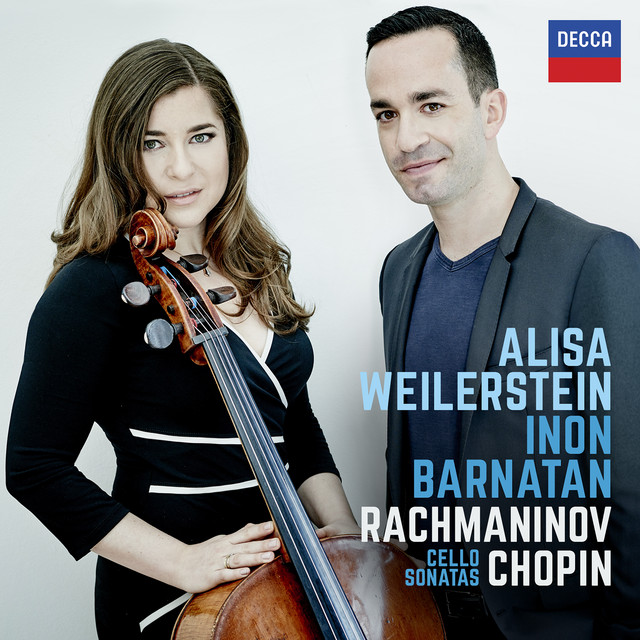
The Kanneh-Mason siblings deliver an enterprising programme pairing Barber's early Cello Sonata with Rachmaninov's expansive Op 19, supplemented by song transcriptions. Sheku's playing reaches "lofty emotional peaks" reminiscent of Jacqueline du Pré in the Barber Adagio, while Isata provides "considerate" accompaniment throughout. The Rachmaninov finale showcases Sheku's "marginally more varied roster of colours" compared to competitors, though the interpretation remains "a close-run contest" with Alisa Weilerstein and Inon Barnatan. Rob Cowan declares this "the most enterprising" of the available recordings, praising Decca's "greater immediacy" in sound. The intimate folk-song "There's nae lark" offers an ideal showcase for the siblings' expressive sampling.
Not on Spotify
Also consider
♪
Editor's Choice
Dvořák, Kurtág
String Quintet No 3 'American', Op 97; Six Moments musicaux; Officium breve
Parker Quartet with Kim Kashkashian (viola) · ECM New Series · F 485 5984
The Parker Quartet's ECM recording demonstrates that "21st-century string quartet-playing is defined by a virtuosity so agile that it's indistinguishable from the process of emotional expression." The Kurtág works generate an "overcast, inward emotional atmosphere" with sonorities that "flash and flicker," while the Dvořák American Quintet receives a "refined and intelligent account" with "panoramic musical and emotional scope." Richard Bratby praises the "often astonishing colour, subtlety and dynamic range" and "forensic detail" in the recorded sound. During Kurtág's Sostenuto episodes, the Parkers "could almost be a full string orchestra" with "ear-scouring intensity." Virtuosity and emotion merge completely in what Bratby calls "haunting, phenomenally accomplished playing."
Not on Spotify
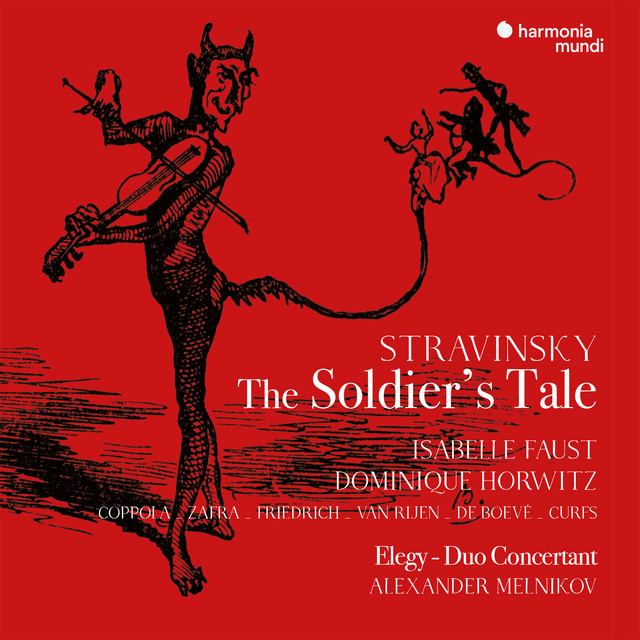
Editor's Choice
Stravinsky
The Soldier's Tale — Élégie; Duo concertant; The Soldier's Tale
Isabelle Faust (violin), Alexander Melnikov (piano); Dominique Horwitz (narrator); with ensemble · Harmonia Mundi · HMM99 2671
Isabelle Faust delivers a "tender, plangent account" of the solo Élégie and her feathery bowing in the Duo concertant's opening shows she has "paid the closest attention to Samuel Dushkin's pioneering version." Despite studio production values, the ensemble evokes the original "mise en scène of performers pulling up in a dusty square." Dominique Horwitz proves "the master" of the English narration, "differentiating between characters and narration." The ending strikes Peter Quantrill as "ideally oblique and unvarnished in the tradition of Brecht and Weill." The historically appropriate period instruments—including Faust's 'Sleeping Beauty' Strad and restored goatskin drums—add authenticity. Quantrill concludes this joins "the top of the pile alongside" the Knussen-led version as a definitive modern recording.
Also consider
Stravinsky — The Soldier's Tale
The Knussen version remains the British music royalty benchmark alongside this new recording.
Beethoven
Violin Sonatas — No 8, Op 30 No 3; No 9 'Kreutzer', Op 47; No 10, Op 96
Frank Peter Zimmermann (violin), Martin Helmchen (piano) · BIS · BIS2537
Frank Peter Zimmermann and Martin Helmchen deliver a "thrilling Kreutzer" and "delightfully skittish and gleeful Op 30 No 3" on this cycle's "fine conclusion." Helmchen plays on a Chris Maene Straight Strung Concert Grand whose "transparency works miracles in terms of balance and texture," allowing both players to remain "naturally audible even amid the whirlwind passagework." Richard Bratby identifies "an electrical charge to this reading; an ever-present sense of the music's latent rhythmic energy." The late Op 96 receives a "thoughtful, often imposing" reading with "exquisitely poetic delicacy"—listen to how "the sound glints and almost dissolves" in the theme's lift and revolve. "Beautiful playing, keen but lightly worn intelligence and an unflagging supply of Beethovenian energy" make this "highly rewarding."

Editor's Choice
Franz Liszt
Années de pèlerinage – année 1: Suisse, S160; Bénédiction de Dieu dans la solitude, S173 No 3
Charles Owen (piano) · Avie · AV2476
Charles Owen's traversal of Liszt's Swiss Année is a masterclass in colour and imagination. He brings organ‑like weight to the opening 'Chapelle de Guillaume Tell', shaping each vignette with spacious tempos that evoke Alpine air and vistas while never losing rhetorical urgency. His account of 'Vallée d'Obermann' strips away melodrama, revealing a forthright human utterance that moves plausibly from desolation to spiritual rebirth. Owen's crystalline voicing in the gentler pieces and his controlled power in the storm of 'Orage' demonstrate a perfect balance of technical command and poetic insight. The concluding 'Bénédiction de Dieu dans la solitude' glows with reverent repose, its harmonies illuminated by subtly balanced chords. This recording redefines the cycle as a unified, emotionally coherent masterpiece, offering listeners a fresh, compelling perspective on Liszt's proto‑Impressionist vision.
♪
Editor's Choice
Various (Albéniz, Balakirev, Chopin, Debussy, Liszt, Rachmaninoff, Schubert, etc.)
The Complete Solo Recordings
Cyril Smith (piano) · APR · APR7313
This three‑disc set resurrects the artistry of Cyril Smith, a pianist whose pre‑stroke recordings have long been eclipsed by his later duo fame. Smith's 1929–46 shellac recordings display a virtuosity that rivals the great Romantic interpreters: his account of Balakirev's Islamey is a dazzling, risk‑taking tour de force, delivered with unerring accuracy and a sizzling intensity that still startles. The set also includes revelatory readings of Rachmaninoff's Second and Third Concertos (with Malcolm Sargent and the Philharmonia), a quicksilver Paganini Rhapsody, and a poetic account of Schubert's G flat Impromptu that conveys yearning and regret with unparalleled sincerity. Smith's crisp articulation in the Bliss Polonaise and his spirited account of Dohnányi's Nursery Song Variations demonstrate a musical intelligence that places him among the pianistic giants of the twentieth century. An essential document for any serious collector.
Not on Spotify
♪
William Bolcom / Frédéric Chopin
Bolcom Twelve New Études; Chopin Mazurkas, Polonaises, Waltzes
Ran Dank (piano) · Avie · AV2475
Ran Dank's debut disc braids William Bolcom's twelve new études with a selection of Chopin's Mazurkas, Polonaises and Waltzes, creating a provocative dialogue between two composer‑pianists. Dank's pianism is both virtuosic and poetic: his reading of Chopin's C minor Polonaise treats the dance as a brooding, operatic prologue, while his account of the Op 42 Waltz blossoms with joyful abandon. Bolcom's avant‑garde études, particularly 'Scène d'opéra' with its declamatory octaves, gain extra shock value after Chopin's lyrical passages. Dank's nimble articulation in the pointillistic Third Étude and his sumptuous tone in 'Butterflies, hummingbirds' demonstrate a mastery of colour and dynamics. The result is a distinctive, excellently engineered debut that rewards repeated listening, showcasing a thoughtful artist who shapes the programme as a cohesive emotional journey.
Not on Spotify
Also consider
William Bolcom — Twelve New Études
Hamelin's pioneering recording is a benchmark for the set, offering a more weighty, stride‑piano‑inspired approach against which Dank's lighter, suppler reading stands out.

Editor's Choice
Various (Bartók, Brahms, Mussorgsky)
Nostalgia
Magdalena Kožená (mezzo‑soprano), Yefim Bronfman (piano) · Pentatone · PTC5186
Magdalena Kožená and Yefim Bronfman’s disc “Nostalgia” weaves together Bartók’s acerbic Slovak Village Scenes, Brahms’s emotionally varied Lieder, and Mussorgsky’s unsentimental The Nursery, linking the three through their use and transformation of folk material. Kožená’s voice is in prime form, capturing every mood with spontaneous immediacy—from the tender ‘The Bride’ to the mordant humour of ‘Wedding’—while Bronfman’s brilliant, boldly coloured pianism provides an ideal counterpart. In Mussorgsky she avoids caricature, delivering a delightful comic touch and the purity needed for the child Misha. Highlights include the tense opening of Brahms’s ‘Von ewiger Liebe’, the haunted barcarolle ‘Meerfahrt’, and the burning directness of ‘Ach, wende diesen Blick’. The recording’s sound is clear and resonant, letting the singers’ nuanced phrasing shine. A masterclass in characterful song performance that rewards repeated listening.
Editor's Choice
Pärt
Passio (Passio Domini Nostri Jesu Christi secundum Joannem)
Helsinki Chamber Choir / Nils Schweckendiek (conductor) · BIS · BIS2612
Pärt’s 1982 Passio receives a luminous new interpretation from the Helsinki Chamber Choir under Nils Schweckendiek, distinguished by the choir’s lustrous depth and the recording’s forensic clarity. The performance brings every dissonance and resolution into sharp relief while maintaining a resonant sonic aura that elevates the spiritual narrative. Schweckendiek’s meticulous attention to detail allows the instrumental ensemble to blend organically with the voices, creating a unified tapestry of sound. The closing inscription, ‘Qui passus est pro nobis, miserere nobis. Amen’, stretches across a minute and a half of awed silence, evoking eternity as intended. This disc stands as a testament to Pärt’s profound musical language, offering both newcomers and seasoned listeners a fresh perspective on the Passion story. Highly recommended for its textual insight and transcendent atmosphere.

Editor's Choice
Josquin (and related composers)
Josquin's Legacy
The Gesualdo Six · Hyperion · CDA68379
The Gesualdo Six’s programme ‘Josquin’s Legacy’ pairs familiar Josquin motets with rare works by his contemporaries, creating an inventive survey of the Renaissance motet repertoire. The ensemble’s clear, luminous sound—characterised by a bright countertenor top and a solid bass line—brings a fresh, English sensibility to the polyphony. Fabrice Fitch highlights the daringly high pitch for Ockeghem’s Intemerata, producing a magical transparency, and praises the ensemble’s seamless coordination in tricky passages such as those in Tous les regretz. The disc’s standout moment is the performance of Absalon fili mi, where the choir’s controlled restraint yields intense emotion. While the Hilliard Ensemble’s classic recording (Virgin/Erato) is cherished, Fitch finds this new account superior in nuance and expressiveness. An essential addition for lovers of Renaissance vocal music.
♪
Editor's Choice
Philip Glass
Akhnaten
Metropolitan Opera Chorus and Orchestra / Karen Kamensek; Anthony Roth Costanzo (countertenor, Akhnaten), J'Nai Bridges (mezzo‑soprano, Nefertiti), Dísella Lárusdóttir (soprano, Queen Tye), Zachary James (bass, Scribe) · Orange Mountain · OMM0154
The 2020 Metropolitan Opera production of Philip Glass’s Akhnaten, captured live in this release, offers a visually and musically hypnotic account of the ancient Egyptian pharaoh’s story. Conducted by Karen Kamensek, the orchestra sustains Glass’s repetitive, pulsating textures with relentless precision, while the Met Chorus delivers the ritualistic chants with striking clarity. Countertenor Anthony Roth Costanzo commands the title role with a gleaming, otherworldly voice, perfectly suited to Glass’s spare vocal lines; his duets with J’Nai Bridges’s lush mezzo‑soprano Nefertiti glow with sensuality. The staging by Phelim McDermott, featuring the Gandini Juggling Company, transforms the opera’s slow‑motion rituals into a mesmerising spectacle, and the recording captures the stage atmosphere and the subtle lighting design without sacrificing detail. Zachary James’s imposing Scribe and Dísella Lárusdóttir’s soaring Queen Tye further enrich the cast. This Orange Mountain release stands as the definitive video document of a remarkable production, indispensable for lovers of contemporary opera.
Not on Spotify
Mozart
Piano Concertos (K175 onwards), including K242, K246, K271, K365, K414, K415, K449, K450, K451, K453, K456, K459, K466, K467, K482, K488, K491, K503, K537, K595
Malcolm Bilson (fortepiano), English Baroque Soloists / John Eliot Gardiner · DG Archiv · 483 9963
This 104-CD boxed set presents John Eliot Gardiner's complete DG and Archiv Produktion recordings spanning from 1978 to 2000—a remarkable survey of period-performance pioneering across Baroque, Classical, and Romantic repertoire. The collection features his Monteverdi Choir, English Baroque Soloists, and Orchestre Révolutionnaire et Romantique in major projects including Bach's Passions and B minor Mass, Beethoven's Missa solemnis and symphonies, and the complete Mozart piano concerto cycle with Malcolm Bilson on fortepiano. Particularly revelatory are the fortepiano recordings, which demonstrate how this instrument could both sing and command, making Mozart's orchestral dialogues vivid and joyous. The da Ponte operas feature exceptional casts including Bryn Terfel, Rodney Gilfry, and Anne Sofie von Otter, while the Monteverdi Vespers (1989) remains an established classic. With 104 CDs at less than £2 each, this represents outstanding value for recordings that maintain universally high standards of singing, playing, and intelligent interpretation.
Josquin S Missa Hercules Dux Ferrarie 1503 4
This Gramophone article explores Josquin's Missa Hercules dux Ferrarie (1503/4), one of the most remarkable Renaissance masses, written for Duke Ercole I d'Este of Ferrara. The mass derives its title from an eight-note ostinato that encodes the syllables of the Duke's name and rank ('Hercules dux Ferrarie' = re ut re ut re fa mi re). Author Fabrice Fitch describes how this severe, geometric construction—reminiscent of Ercole's castle facade—houses music of extraordinary invention and subtlety. The article then traces the legacy of such musically encoded homages through five thematic sections: 'Josquin, before and after Hercules' examining his other ostinato masses; 'Renaissance homages' featuring works by Cipriano de Rore and Escobedo that consciously emulate Josquin's technique; 'Baroque reminiscences' including Frescobaldi's capriccio and Bach's Musical Offering; 'Modern echoes' with Berg's Kammerkonzert and Boulez's Messagesquisse; and a 'Wild card' section on the Brahms/Schumann/Dietrich 'FAE' Sonata. The Hilliard Ensemble's recording is highlighted as the pick of countertenor performances.
Josquin des Prez
Missa Hercules dux Ferrarie
Hilliard Ensemble / Paul Hillier · Virgin
The article's featured recording, praised as 'the pick of those with countertenors on the top line,' offering an exemplary interpretation of Josquin's most architecturally severe and musically inventive ostinato mass.

Josquin des Prez
Missa La sol fa re mi
Tallis Scholars / Peter Phillips · Gimell
Josquin's earliest ostinato mass, predating the Hercules Mass, featuring a five-note subject in the tenor with flexible rhythms; recommended alongside the Hercules Mass for understanding the composer's ostinato technique development.
♪
Jean-Philippe Rameau / arranged
Hippolyte et Aricie (orchestral suite)
Orchestra of the Age of Enlightenment / Steven Devine · Linn
A definitive modern recording of Rameau's groundbreaking 1733 opera, praised for its dramatic urgency, vivid orchestral colors, and scholarly attention to period performance practices.
Not on Spotify
Netrebko Retrospective
This Gramophone article presents a retrospective of soprano Anna Netrebko's prolific career, highlighting five standout recordings that showcase her remarkable versatility across the operatic repertoire. The feature traces her artistic journey from early bel canto roles to her triumphant advancement into heavier spinto territory. The first recommendation is her 'Russian Album' with Valery Gergiev and the Mariinsky Orchestra—a truly outstanding showcase of Russian arias and songs from Rimsky-Korsakov operas that demonstrates her at her finest. The 'Verdi' album with Gianandrea Noseda marks a significant milestone as Netrebko conquers the heavier Italian repertoire with knockout performances of Leonora, Elisabetta, and Lady Macbeth. The feature also celebrates her iconic performance in Willy Decker's Salzburg Festival staging of La Traviata, highlighting both her artistic achievement and her long professional partnership with tenor Rolando Villazón. The article ultimately portrays Netrebko as an artist of extraordinary range and vocal brilliance, whose career choices reflect both strategic artistry and deep musical commitment.
♪
Various (Rimsky-Korsakov)
Russian Album
Anna Netrebko, Mariinsky Orchestra / Valery Gergiev · DG
An outstanding showcase of Russian arias and songs from three Rimsky-Korsakov operas, conducted by her Mariinsky mentor Valery Gergiev, featuring Netrebko in glowing voice at her finest.
Not on Spotify
♪
Verdi
Verdi Album (selections from Trovatore, Don Carlo, Macbeth)
Anna Netrebko, Orchestra Teatro Regio Torino / Gianandrea Noseda · DG
A knockout selection marking Netrebko's advancement into heavier spinto repertoire, featuring her Trovatore Leonora, majestic Elisabetta, and fearsome Lady Macbeth.
Not on Spotify
Verdi
La traviata
Anna Netrebko, Rolando Villazón (ten), Thomas Hampson (bar), Vienna Philharmonic / Carlo Rizzi · DG
The iconic 'little red dress' performance from Willy Decker's Salzburg Festival staging, capturing Netrebko's artistic triumph and her long partnership with Villazón.
Out Of The Shadows
This feature article from Gramophone magazine (November 2021) examines the rediscovered legacy of Florence Price (1887-1973), the pioneering African American composer who became the first woman of African descent to have her symphony performed by a major American orchestra in 1933. The article explores how Price's work has been brought out of historical obscurity thanks to artists and scholars championing her music. It highlights the crucial role of Maude Roberts George, a black arts administrator and music critic who worked behind the scenes to support Price and personally underwrote the Chicago Symphony's premiere of her First Symphony. The article also discusses Price's compositional style, examining influences beyond the commonly cited Dvořák, including Samuel Coleridge-Taylor and the Fisk Jubilee Singers' transformation of negro spirituals into concert art. Musicologists praise Price's innovative approach to symphonic form, particularly her use of call-and-response phrases, African drums, and her ability to incorporate distinctly African American musical soundscapes within the traditional European symphonic framework. The article notes the recent DG recording of her First and Third Symphonies by Yannick Nézet-Séguin and the Philadelphia Orchestra as a significant contribution to bringing Price's music to wider audiences.
♪
Florence Price
Symphony No. 1 in E minor; Symphony No. 3 in C minor
Philadelphia Orchestra, conducted by Yannick Nézet-Séguin · Deutsche Grammophon
A newly released, critically acclaimed recording praised for its 'sumptuous' sound, with conductor Nézet-Séguin noting Price's personal voice and the symphonies' attractive proportions.
Not on Spotify
Sibling Musings
This article profiles cellist Sheku Kanneh-Mason and pianist Isata Kanneh-Mason, siblings from the renowned Kanneh-Mason family of seven musician children, discussing their debut duo album 'Muse' released on Decca. The album features Rachmaninov's Cello Sonata and Barber's Cello Sonata (1932), along with arrangements of songs by both composers. The project originated from a 2019 US tour where they performed both sonatas; when pandemic cancellations halted live performances, they decided to record the repertoire they'd invested in. The siblings discuss the challenges of Barber's harmonically and rhythmically complex work, particularly the demanding Presto section of the slow movement, which they managed to capture successfully in just one or two takes. Sheku expresses his admiration for historical recordings and artists like Piatigorsky, while Isata shares influences including Schnabel, Horowitz, Ashkenazy, and Argerich. The interview reveals their musical household with four pianos where siblings practice simultaneously, and touches on their family background with Sierra Leonean heritage through their mother Kadiatu.
♪
Sergei Rachmaninov
Cello Sonata in D minor, Op. 19
Sheku Kanneh-Mason (cello), Isata Kanneh-Mason (piano) · Decca
The Kanneh-Mason siblings' electrifying performance of Rachmaninov's romantic cello sonata, recorded with producer Jonathan Allen who captures the energy of a live concert by using large unbroken sections rather than excessive editing.
Not on Spotify

Samuel Barber
Cello Sonata, Op. 6 (1932)
Sheku Kanneh-Mason (cello), Isata Kanneh-Mason (piano) · Decca
A comparative rarity on disc, the Barber Sonata showcases youthful passion and energy with its compact, dramatic language and rhythmic development, which the siblings found worked beautifully in recital.
Samuel Barber
Cello Sonata, Op. 6
Gregor Piatigorsky (cello)
Sheku mentions this historical recording as a particular favorite, noting that Piatigorsky's beautiful interpretation of the Barber Sonata greatly influenced his own approach to the work.
Soprano On The Edge
This Gramophone magazine feature from November 2021 profiles Russian soprano Anna Netrebko in an article titled "Soprano On The Edge." The piece marks her first solo album in five years, titled "Amata dalle tenebre" (Beloved by the Shadows), which represents a dramatic departure from her earlier repertoire. The album features arias by Wagner, Purcell, Strauss, and others—works centered on themes of death and mortality, including Elisabeth from Tannhäuser, Elsa from Lohengrin, Isolde's Liebestod, and Dido's Lament from Purcell's Dido and Aeneas. Netrebko reflects on how her voice has evolved from the light, soubrette roles of her early career (Zerlina, Adina, Norina) to the heavier dramatic repertoire she now inhabits. She discusses the impact of motherhood on her vocal development and how moving to heavier repertoire actually improved her breath control and expanded her artistic capabilities.
The article explores how the pandemic influenced the album's creation, with parts recorded live at La Scala under conductor Riccardo Chailly and other portions recorded without audiences due to lockdowns. Netrebko shares personal reflections on being hospitalized with Covid after performing at the Bolshoi, and her perspective on the opera world's struggles during the pandemic. Regarding her Wagnerian ventures, she cites studying great interpreters like Waltraud Meier, Nina Stemme, and Birgit Nilsson as she prepared the challenging Liebestod. The album cover, depicting a woman covered in shadow with only her eyes visible, symbolically represents the album's themes of desperation, death, and the "shadows" the world has lived through.
♪
Verdi
La traviata (highlights) / Various Opera Arias
Anna Netrebko; Claudio Abbado (conductor); Mahler Chamber Orchestra · Deutsche Grammophon
Netrebko's 2004 debut DG disc with Abbado and the Mahler Chamber Orchestra, featuring Verdi and Mozart arias, including 'Sempre libera' from La traviata.
Not on Spotify
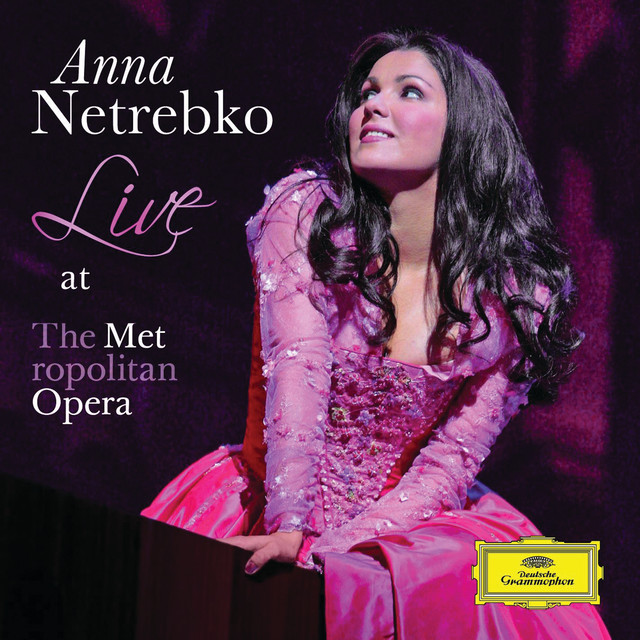
Various Composers
Anna Netrebko Live at the Met
Anna Netrebko; Dmitri Hvorostovsky (Andrei); Valery Gergiev (conductor); Mariinsky Orchestra · Deutsche Grammophon
Live recording from the Metropolitan Opera featuring Netrebko as Natasha in Prokofiev's War and Peace alongside Hvorostovsky as Andrei Bolkonsky.
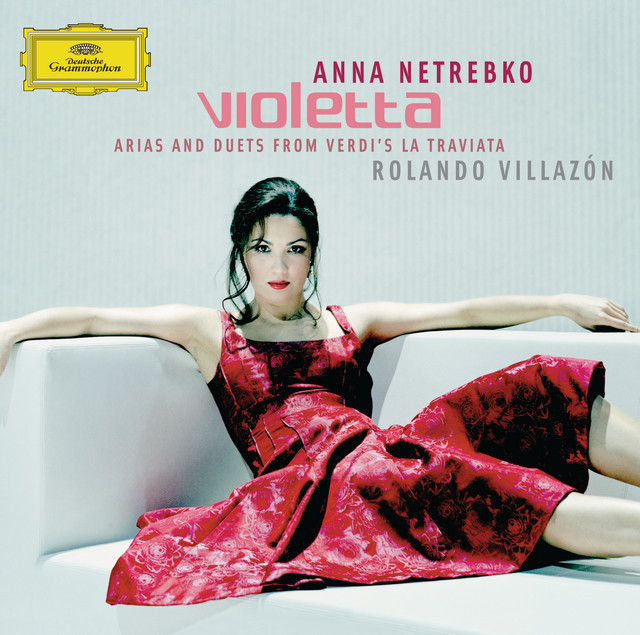
Various Composers
Verdi
Anna Netrebko; conductor and orchestra not specified · Deutsche Grammophon
Netrebko's all-Verdi disc praised by critic Mike Ashman as 'a serious record by a serious singer in tip-top vocal shape,' featuring roles like Anna Bolena and Leonora.
Willem Mengelberg
This Gramophone article commemorates the 150th anniversary of Dutch conductor Willem Mengelberg's birth (1871), profiling him as a legendary 'icon of icons' whose recordings continue to inspire. Author Rob Cowan describes Mengelberg as 'a Napoleon of the orchestra'—physically small but magnetically commanding on the podium—who collaborated closely with Mahler and became a ceaseless promoter of contemporary music. The article chronicles his remarkable 50-year tenure (1895-1945) leading the Concertgebouw Orchestra, his tenure with the New York Philharmonic alongside Toscanini, and his controversial conduct during the Nazi occupation, which led to his post-war exile from the Netherlands. The piece focuses primarily on Mengelberg's recorded legacy, praising his dramatic, emotionally charged interpretations of Mahler, Bach's St Matthew Passion, Tchaikovsky's symphonies, and Richard Strauss's Ein Heldenleben. Cowan particularly admires Mengelberg's ability to deliver performances 'rich in charisma and imagination,' noting how his recordings—from Bach to Brahms, Handel to Wagner—remain emotionally impactful decades later. The article concludes by recommending Pristine Audio's transfers of Mengelberg's recordings and directing readers to the comprehensive online archive at willemmengelberg.nl.

Richard Strauss
Ein Heldenleben
Philharmonic-Symphony Orchestra of New York / Willem Mengelberg · Pristine Audio
The article's featured 'Essential Recording,' praised by Richard Osborne as 'unchallenged' since 1989. Mengelberg's 1928 performance showcases his 'fanatical concern to get the cleanest attack' combined with 'emboldened string choirs that sing their hearts out,' considered superior to any of Toscanini's commercial recordings with the same orchestra.
♪
Johann Sebastian Bach (arr. Mahler)
Air from Third Orchestral Suite (BWV 1068)
Concertgebouw Orchestra / Willem Mengelberg
A unique 1929 recording of Mahler's orchestration of Bach's Third Orchestral Suite Air (the famous 'Air on the G String'), demonstrating Mengelberg's close connection to Mahler and his dedication to performing the composer's own arrangements.
Not on Spotify
♪
Pyotr Ilyich Tchaikovsky
Symphony No. 6, 'Pathétique'
Le Grand Orchestre de Radio-Paris / Willem Mengelberg · Malibran
The 1944 Paris radio broadcast recording is described as 'by far the most moving option,' featuring a remarkable 12'17" finale that represents a gradual and effective tempo slowdown from earlier 1937 (8'36") and 1941 (9'40") recordings.
Not on Spotify
Ysa E S Violin Sonata No 2
This Gramophone feature from November 2021 spotlights Ysaÿe's Violin Sonata No 2 in A minor, a late-Romantic showpiece composed in July 1923, through an interview with British violinist Jack Liebeck. Liebeck discusses his lifelong obsession with Ysaÿe's six unaccompanied violin sonatas, contrasting their lyrical, violin-friendly writing with his admitted discomfort with solo Bach — a view he acknowledges as "practically heresy," especially given that Ysaÿe's Second Sonata opens with a quotation from Bach's Partita No 3. The article explores the sonata's dramatic architecture: the first movement "Obsession" begins with a Bach reference that disintegrates into anger; the second movement "Malinconia" requires a mute to produce a gothic, otherworldly tone; the third movement "Danse des ombres" features a pizzicato theme and variation; and the finale "Les furies" erupts with dazzling double stops and sul ponticello effects. Liebeck describes Ysaÿe's music as the violin equivalent of Jimi Hendrix — raw, cutting-edge, and slightly kitsch, yet wonderful — a "conjuring show" of fireworks, mystery, and magic. The feature also notes Liebeck's approach to interpreting the work independently, avoiding listening to other violinists' recordings.

Eugène Ysaÿe
Violin Sonata No 2 in A minor, Op. 27 No. 2
Jack Liebeck (violin)
Jack Liebeck's own recording of Ysaÿe's complete unaccompanied violin sonatas, discussed and promoted throughout this feature article.